

Every founder with a laptop and a stack of AI tools now believes they can build a billion-dollar company alone. Most of them are wrong.
It's not because the dream is fake. The one-person unicorn is very real, and 2026 is the year it stopped being a prediction. The problem is that the same tools that make it possible also make it easy to fail in brand-new ways. Building a unicorn with AI agents is not "the old startup, but easier." It's a different game with a different set of traps, and most solo founders walk straight into them.
If you want the optimistic, step-by-step version, we've already written it: how to build a unicorn with AI agents. This article is the other half of the truth. These are the mistakes that quietly kill most agentic startups before they ever get going, and the things the rare founders who break through actually do differently.
Start building with Founder Institute →
What Building a Unicorn With AI Agents Actually Requires
Let's be clear about the claim. A solo founder building with AI agents isn't doing everything by hand. They're directing a system, treating AI agents as their first ten hires, while they own the judgment: what to build, who to serve, and which relationships to protect.
That sounds liberating, and honestly it is. But it also removes every excuse. When you can spin up a whole workforce in an afternoon, the bottleneck stops being resources and starts being you. Your taste. Your discipline. Your ability to tell real progress from expensive-looking motion. That's exactly where most founders come undone, so let's walk through how.
Mistake #1: They Fall in Love With the AI Agents, Not the Problem
The most common way to fail is to start from the wrong end. Founders get dazzled by what agents can do and go hunting for a use case afterward. "AI can write code, so let me build… something."
That's backwards. Customers don't pay for AI. They pay for a problem to go away. The founders who make it start with a specific, expensive, recurring pain, something that costs a real customer time or money every single week, and only then ask whether agents can solve it. If your starting point is the technology and not the wound, you're building a demo, not a company.
Mistake #2: They Never Test Whether Their AI Agents Can Actually Deliver
Here's the test almost everyone skips, and it's unique to AI-native products. It's not enough to confirm that customers want the outcome. You have to prove that an agent can produce that outcome reliably. Not once, in a polished demo, but again and again, on messy real-world inputs, without you babysitting it.
Plenty of agentic startups look incredible in the pitch and then fall apart in production, because the founder validated the demand but never validated the delivery. A product that works 70% of the time isn't a 70%-good business. In a lot of categories, it's a zero. So stress-test reliability before you write the roadmap, not after your first customers have already churned.
Mistake #3: They Ship a Thin AI Wrapper and Call It a Moat
If you can build your product in a weekend, so can the next person. A thin interface sitting on top of a foundation model is a feature, and features get copied, or absorbed by the model providers themselves.
The founders who fail assume that being early is the same as being defensible. It isn't. The ones who last build things that compound: proprietary workflows, accumulated data, deep integrations, and a product that gets harder to replicate with every user interaction. Ask yourself the uncomfortable question early. If a well-funded team decided to clone this next month, what would actually stop them? If the honest answer is "nothing," you don't have a company yet.
Mistake #4: They Treat Their AI Tools Like Gadgets, Not a Team
There's a real skill in running an AI workforce, and most founders don't have it yet. They collect AI tools like trophies, a prompt here, a task there, instead of designing an actual operating system where a growth agent, a support agent, a finance agent, and a dev agent hand work off to each other, with the founder sitting at the head of the org.
Get this wrong and you become the bottleneck you were trying to escape, personally shuttling context between a dozen disconnected AI tools all day. Get it right and you genuinely operate at the scale of a full company. That orchestration layer is exactly why the built-in AI tools for founders that ship with the Founder Institute program are designed to work as a coordinated team, not a drawer of gadgets.
Mistake #5: They Mistake Motion for Real Startup Speed
Agents make it intoxicatingly easy to do things. Generate ten landing pages, draft fifty emails, refactor the codebase twice before lunch. It feels like velocity. A lot of the time it's just expensive spinning.
The speed that matters is speed toward the truth: shipping to real customers, learning what they'll pay for, and killing what doesn't work. The founders who fail confuse output with progress, and they end up with a beautifully built product nobody asked for. Clarity has to come before throttle. Decide what actually moves the business, then point the agents at that, and only that.
Mistake #6: They Try to Build a Solo Unicorn Completely Alone
"Solo founder" describes your cap table. It is not a prescription for how you should build. The biggest silent killer of one-person companies isn't strategy, it's isolation. No one to pressure-test the idea. No one who's three months ahead to warn you off the cliff you're walking toward. No network when it's time to raise.
The math of a solo unicorn is agents plus one founder. But the survival of a solo unicorn depends on that founder being plugged into other people building the same way. The ones who make it don't grind away in a vacuum. They borrow judgment, momentum, and connections from a community that's already been down the road.
What the Best AI-Native Solo Founders Do Differently
Strip away the noise and the founders who actually build unicorns with AI agents share a short, unglamorous list of habits. They obsess over a real problem before they touch a tool. They prove reliability, not just demand. They build for defensibility from day one. They run their agents as a coordinated team instead of a pile of prompts. They chase learning, not activity. And they refuse to build alone.
None of that is about owning the best model, the cleverest prompt, or the longest list of AI tools. It comes down to judgment, the one thing agents still can't do for you. In the agentic era, the AI tools are the commodity. Your taste and your discipline are the edge.
How Founder Institute Helps You Build a Unicorn With AI Tools
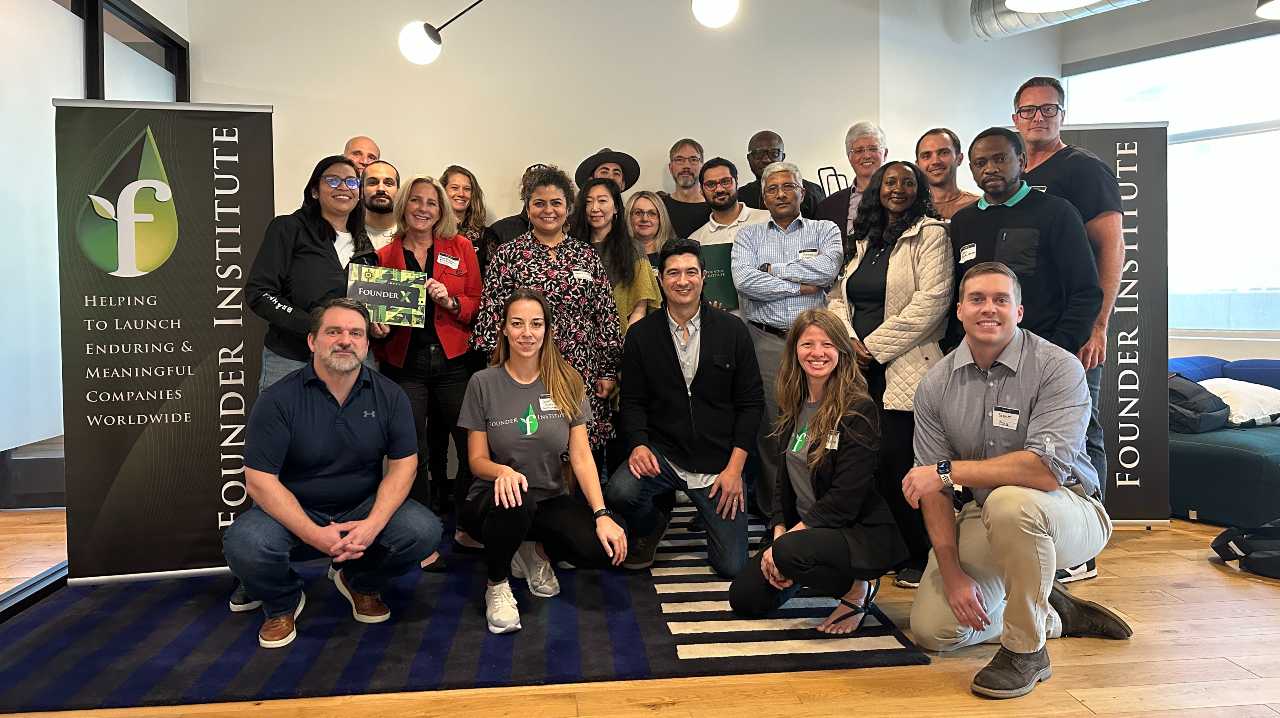
Avoiding these mistakes is a lot easier when you're not the only person in the room who's ever tried. Founder Institute has repositioned itself as the world's largest AI-native company builder, a program built specifically to help individual founders build companies with unicorn potential, without the isolation that sinks most of them. Enrolled founders get free, startup-trained agents, a curriculum that adapts to their stage each week, and access to early capital through demo days and local funds.
You can read the full story of the shift in Founder Institute's move to an AI-native company builder, and when you're ready for the constructive version of this article, the step-by-step guide to building a unicorn with AI agents walks the whole path.
Most solo founders won't build a unicorn. The ones who do simply refuse to make these mistakes, and they don't do it alone.
Apply now at fi.co and start building.