
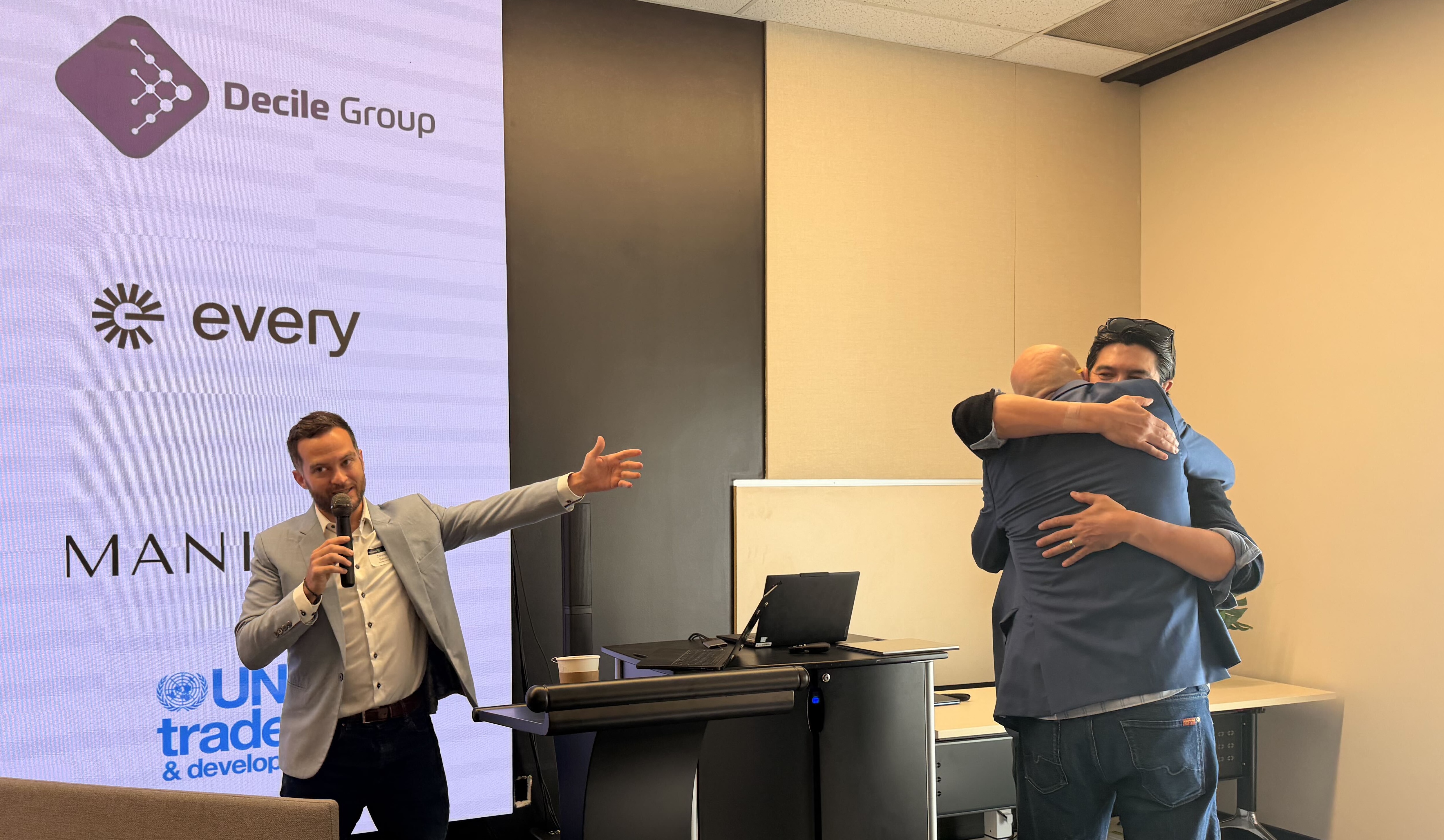
Connor Sattely is Founder Institute's new Chief Executive Officer. He takes the role after three years at VC Lab and Decile Group, where he reviewed more than 1,000 deals across more than 200 venture funds, and after fifteen years working inside startup ecosystems on four continents.
His argument for taking the job is short: building a company has never been faster, and getting somebody to believe in you before you have proof has never been harder.
Who he is
Connor grew up in Pittsburgh and has spent the last sixteen years in Europe and East Africa, with Amsterdam as his base for the last decade. His work has almost never been about the country he lives in.
He co-founded GovFaces in Geneva, a civic technology company connecting citizens with their elected representatives. He later co-founded SEMA in Uganda, a citizen feedback system for public institutions that's still running today. Between them he built the Justice Entrepreneurship School in The Hague and ran international hubs taking entrepreneurship curriculum into new countries.
Along the way he's worked with startup ecosystems in Ukraine, Tunisia, Nigeria, South Africa, Kenya, Uganda, Malaysia, Indonesia and Australia, and more. That list is the reason he's a fit for an organization that runs across more than 200 cities. He's spent his career on the parts of the map most investors never fly to.
For the last three years he's been at VC Lab and Decile Group, working on deals and hosting the Top Decile Podcast, where he pulls back the curtain on how VCs think and decide where to invest.
That combination is unusual, and that’s the point. Plenty of people know how to build companies, and plenty know how to fund them. Connor has spent years watching the seam between the two, and watching how many good founders fall through it.
Why belief is the thing he's focused on
The cost of building has collapsed. Anyone can ship something in a weekend, and expectations moved with the tools: show up with traction, revenue, a demo that already works, as though the step from zero to one were a formality nobody has to cross.
That expectation is what he thinks is broken. When everyone can build, the scarce input isn't code. It's the willingness to bet on somebody before there's anything to look at.
He's written the long version of that argument, and it's worth reading in his own words: We Believe You First.
Lean Startup was great. The Mom Test was great. Crossing the Chasm was great.
But 2026 is something totally different. People can create incredible products in
minutes. But will it fix an actual problem? Can it scale? This is the time for a zero
to one accelerator to dominate that market.
The transition
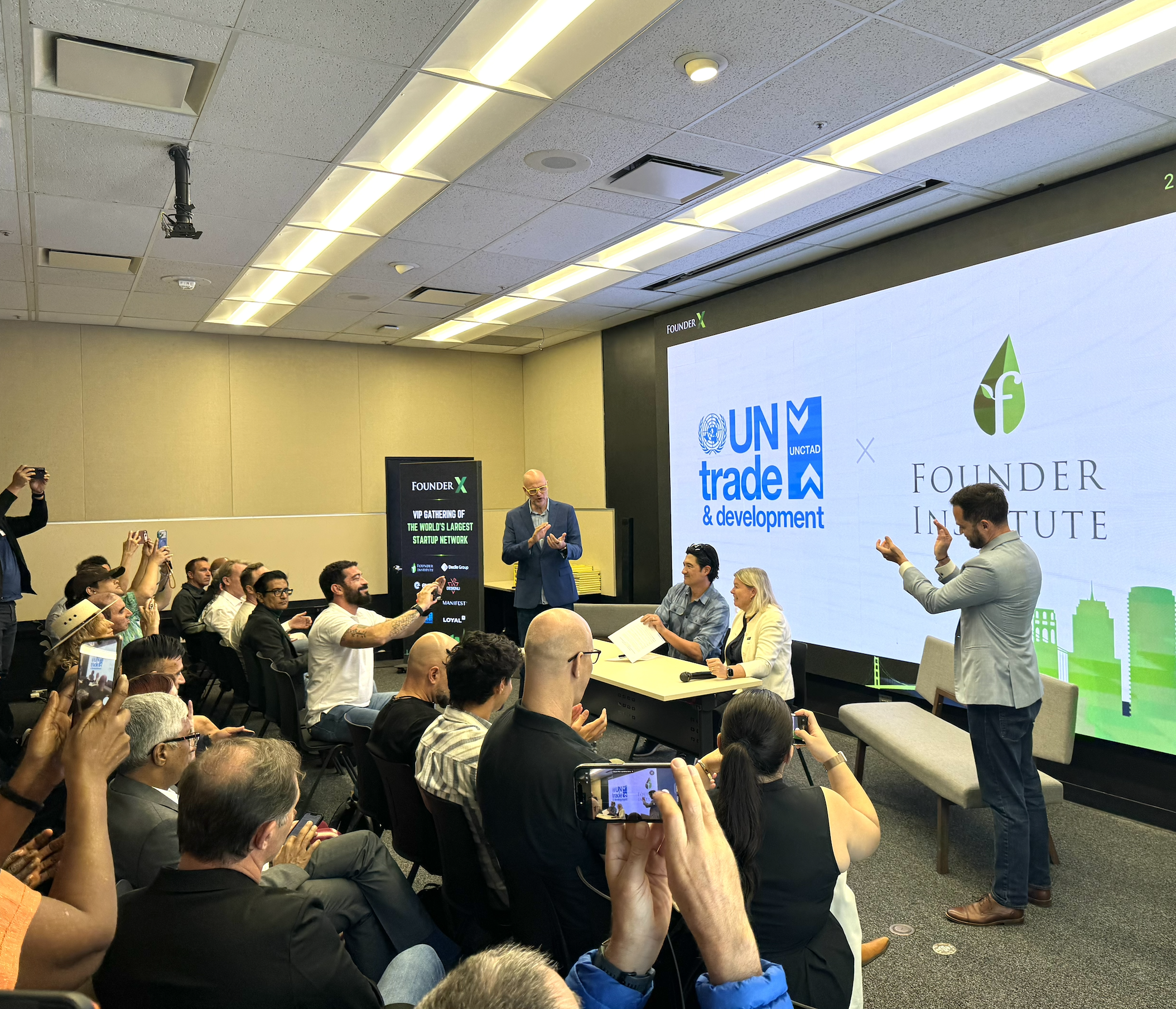
Jonathan Greechan co-founded Founder Institute with Adeo Ressi in 2009 and has led it as Chief Executive Officer. Earlier this year Adeo stepped back in to help run the company alongside him as an active Executive Chairman. The handoff to Connor comes from both of them.
That period produced a significant repositioning: an agentic curriculum built around AI, a return to the zero to one stage where Founder Institute started, and new funding paths for alumni. With that work done, the CEO role passes to Connor.
Neither of them is going anywhere. Adeo continues as executive chairman and stays closely involved through the handoff. He also leads Decile Group, and a company facing this much at once needs a full-time chief executive of its own. Jonathan continues as Chief Innovation Officer, and the network of chapters, mentors and partners that Connor will support is largely the one he built.
What changes for founders
Three things, in the order founders will feel them.
Every founder in a Founder Institute program now works alongside AI agents as well as the mentor network. Customer development, financial modeling, outreach, and a curriculum generated for their specific business rather than a generic syllabus. This is already running and it's going to get significantly better.
Every program will end in a real demo day, with investors and VC experts in the room. A program that ends in a certificate is a course. A program that ends in a check is an accelerator.
Founder Institute chapters will launch local funds, run by local leaders, writing the first checks that decide whether an idea becomes a business. The first of these is already live as a pilot. Founder Institute has spent fifteen years finding founders at step zero, and Decile Group and VC Lab have spent years helping launch the funds that back them. Connecting those two halves is the work Connor is taking on.
What doesn't change
Founder Institute runs in more than 200 cities across 95 countries, and it runs because local leaders operate chapters in their own cities, usually while running their own companies at the same time.
They know which founders in their city are serious months before any fund does. Not because they have better data, but because they're in the room every week. That structure isn't changing, and Connor said as much in his first meeting with the team: he isn't coming in to throw everything away and reinvent it.
If you want to be part of this
Founder Institute is looking for local leaders to launch chapters in new cities. If you've thought about running one where you live, this is a good moment to start that conversation.