
Choosing between a startup accelerator and a startup incubator is one of the most consequential decisions a first-time founder makes, and most make it without understanding how different these programs actually are. The accelerator vs incubator question is not just about structure or duration. It is about stage fit: whether your company is at the right point to benefit from each model. Get it wrong and you either give up equity before you have the traction to justify it, or you spend a year in a program that cannot give you the accountability you need.
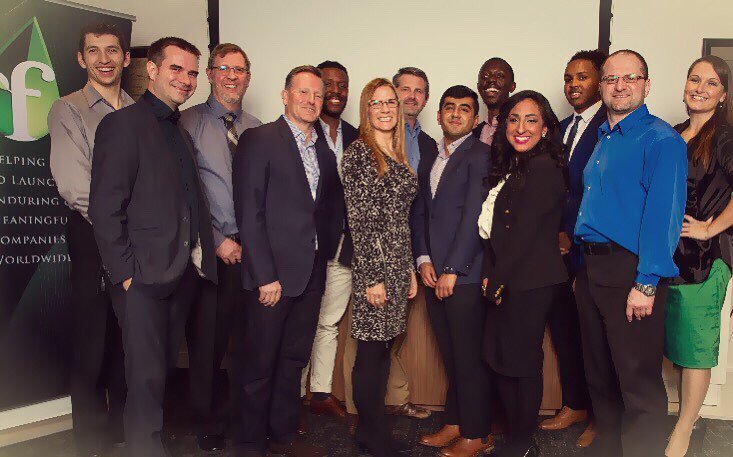
There is also a third option, the pre-seed accelerator, that most comparison guides skip entirely. It is the category where the majority of first-time founders actually belong, and it is where Founder Institute has operated since 2009 across 200+ cities in 65+ countries. Understanding all three models, how they differ on equity, timing, structure, and outcome, is the starting point for choosing correctly.
What Is a Startup Incubator?
A startup incubator is a long-term support program designed for very early-stage founders who need time, workspace, mentorship, and resources to develop an idea or prototype. Most incubators run for one to five years, are affiliated with universities or government economic development organizations, and are either free or low-cost because they are funded by grants or institutional budgets rather than investment returns. Equity is rarely required.
Incubators are built for the exploration phase. Founders in incubators are not expected to have a validated business model or a minimum viable product. The goal is to create an environment where early experimentation is possible without the pressure of an investor clock or a public demo day. According to Harvard Business School, incubators are ideal for founders still in product development without a defined go-to-market strategy.
What incubators provide well: community, physical workspace, access to university research, and peer learning in a low-pressure environment. What most incubators lack: urgency, structured curriculum, milestone accountability, and a clear path from concept to investor-ready company. If you are not under time pressure and benefit most from open-ended exploration, an incubator may be the right environment. If you need to reach a seed round in 18 months, it almost certainly is not.
What Is a Startup Accelerator?
A startup accelerator is a fixed-term, cohort-based program that helps early-stage startups grow quickly through structured mentorship, curriculum, and investor access, usually in exchange for equity. Most programs run three to six months and culminate in a demo day where founders pitch to investors. The model was pioneered by Y Combinator in 2005 and has since expanded to thousands of programs globally.
In 2026, Y Combinator's standard deal is $500,000 for approximately 7% equity. Techstars operates across 50+ cities and invests $120,000 for 6% equity. Both programs, and most traditional accelerators, assume the company already exists, the team is committed full time, and the founders arrive with at least some validated traction. The program's job is to compress the timeline from early traction to fundraising readiness, not to help a founder discover whether their idea is worth building.
This model works well for founders at the right stage. It creates real problems for founders who are not. The intensity, equity requirement, and pace of a traditional accelerator are calibrated for companies with something to accelerate. Applying before you have that foundation usually means giving up equity at the lowest valuation you will ever have, joining a program designed for a stage you have not yet reached, and exiting with less momentum than you arrived with.
Startup Accelerator vs Incubator: What's the Difference?
Here is a direct comparison of the three models, including the pre-seed accelerator, which sits between an incubator and a traditional accelerator and is the stage most first-time founders belong at when they first start looking for a program.
| Factor | Startup Incubator | Startup Accelerator | Pre-Seed Accelerator |
|---|---|---|---|
| Stage | Idea or concept, no product required | MVP with early traction | Idea to early validation |
| Duration | 1 to 5 years | 3 to 6 months | 8 to 16 weeks |
| Equity | Usually none | Often 6 to 10% | Often none (especially government-backed tracks) |
| Structure | Flexible, self-directed | Intensive cohort with defined milestones | Structured early-stage curriculum and mentorship |
| Funding provided | Rarely, or very small grants | $20,000 to $500,000+ in exchange for equity | Varies; many tracks are equity-free |
| Selection basis | Affiliation (university, region, sector) | Traction, team, and idea quality | Founder potential and entrepreneurial traits |
| End goal | Develop a viable concept over time | Scale and raise a funding round by demo day | Validate, launch, and become accelerator-ready |
The table captures the structural differences. The more important insight is what each model signals about readiness: incubators serve exploration, accelerators serve growth, and pre-seed programs serve the gap between the two.
Accelerator vs Incubator: Equity, Funding, and Time Commitment
Equity is the sharpest practical difference between a startup accelerator and a startup incubator, and it is where the timing of your program choice has permanent consequences for your cap table.
Most startup incubators take no equity. They are funded by universities, government economic development budgets, or nonprofit foundations. Access to an incubator is typically free or low-cost, and founders retain full ownership of their company while they develop their concept. The tradeoff is that incubators rarely provide meaningful capital: most offer workspace and mentorship, not checks.
Traditional startup accelerators take equity in exchange for capital. A 6 to 8 percent stake for $100,000 to $500,000 is the market range in 2026. That math only works in the founder's favor when the company's valuation at the time of entry is meaningfully above the implicit valuation the investment implies. A founder accepting $150,000 for 7 percent equity is implying a company valuation of roughly $2 million. If the company has no product, no customers, and no validated market, that valuation is almost certainly too low, and the equity given away at that moment cannot be recovered.
Pre-seed accelerators occupy a different position. Many government-backed and university-affiliated pre-seed programs are explicitly equity-free. Founder Institute's partnership programs, including collaborations with economic development organizations across dozens of cities, operate on founder-friendly models designed to build launch readiness before any equity conversation begins. Founders who complete a pre-seed program before applying to a traditional accelerator arrive with more validation, stronger networks, and significantly more leverage to negotiate.
Why Many Founders Need a Pre-Seed Accelerator First
The accelerator vs incubator comparison assumes every founder falls neatly into one of two buckets: exploring a concept or accelerating a proven one. Most first-time founders do not fit either description. They have an idea they are committed to, they are taking the process seriously, but they have not yet built or validated a product. That is the pre-seed stage, and it is where the majority of the most consequential early decisions get made.
Founder Institute was built specifically for this stage. Since 2009, FI has run more than 1,200 pre-seed cohorts across 200+ cities, working with 8,900+ alumni who have collectively raised more than $2 billion and built companies valued at over $20 billion. The FI Agentic Program is a 14-week structured curriculum that takes founders from idea to launch with a global network of 40,000+ mentors and investors providing real-time feedback at every step.
One of the sharpest differences between FI and most programs is how founders are selected. FI does not primarily evaluate idea quality at the application stage. Instead, selection relies heavily on the Entrepreneur DNA Assessment, a psychometric tool built on 16 years of PhD-backed social science research and benchmarked against 250,000+ candidates across 126 countries. The assessment evaluates 26 dimensions of entrepreneurial potential across four categories: Communication, Working Style, Drive, and Problem Solving. The three traits research identifies as non-negotiable for startup survival are Curiosity, Perseverance, and Self-Reliance. Ideas change. Founder traits do not.
This approach reflects what practitioners across the best accelerator and pre-seed programs consistently find: bet on the founder, not the idea. The founders who perform best in structured programs are not necessarily the ones with the most polished pitches at entry. They are the ones who integrate feedback quickly, maintain conviction under pressure, and keep moving when the original plan breaks down.
Founder Institute vs Traditional Accelerators and Incubators
Understanding where Founder Institute fits in the accelerator vs incubator landscape matters because FI is deliberately not a traditional accelerator, and it is not an incubator.
FI is positioned as "Step 0": the structured pre-seed program that prepares founders for what comes next, whether that is Y Combinator, Techstars, a seed round, or growing independently. The program does not require traction at entry. It does not take equity through its government and university partnership tracks. And it does not end with a demo day for investors: it ends with a fundable company and a founder who has the habits, network, and validated assumptions to compete for the next level of capital.
For founders looking at government-backed innovation programs, university-affiliated accelerators, or economic development initiatives in their region, the equity-free pre-seed model is particularly relevant. Founder Institute's partnership programs with cities, universities, and development organizations have run in 200+ cities worldwide, and many of those tracks are explicitly designed to be accessible to founders who would never accept traditional accelerator equity at the idea stage. FI's government partnership model has produced outcomes including 100% business formation rates and thousands of new ventures created through public-sector collaboration.
The comparison most relevant to a first-time founder deciding where to start: Y Combinator and Techstars are exceptional programs for founders who are ready for them. Founder Institute exists for the stage before that readiness, with the structure and accountability to help founders get there without giving up equity along the way.
How to Choose the Right Startup Program
The right program is determined by stage, not by brand. Use these three questions as your filter.
Do you have a validated product with early customers? If yes, a traditional startup accelerator may be appropriate. You have something to accelerate. The equity tradeoff is justified because you have the traction to support a meaningful valuation.
Do you have an idea you are committed to but no product or validated customers yet? A pre-seed program is almost certainly the right first move. You need structure, mentorship, and a founder network, but not an equity conversation. This is where Founder Institute is built to operate.
Are you still exploring whether entrepreneurship is right for you, or you have a very rough concept and need time to develop it? A startup incubator, particularly one affiliated with a university or government program, may be the right environment. You benefit from community and space without committing to a sprint you are not ready for.
The practical guide: if you are not yet ready to apply to Y Combinator or Techstars, apply to a pre-seed program first. Use it to validate your assumptions, build your team, and develop the habits and network that make you competitive. Founders who arrive at a traditional accelerator having completed a pre-seed program consistently report stronger outcomes: cleaner cap tables, more developed products, and better investor relationships from day one.
Ready to start? Apply to Founder Institute, explore the full guide to pre-seed accelerators, or take the free Entrepreneur DNA Assessment to understand where your natural founder strengths are before you choose a program.
FAQ: Startup Accelerator vs Incubator
What is the difference between a startup accelerator and a startup incubator?
A startup accelerator is a short, intensive cohort program (3 to 6 months) focused on scaling a startup with early traction, usually in exchange for equity. A startup incubator is a longer-term, flexible support environment (1 to 5 years) designed for founders at the concept or early product stage, usually free or low-cost with no equity required.
Do startup accelerators take equity?
Most traditional startup accelerators take 6 to 10 percent equity in exchange for capital investment, typically $20,000 to $500,000. Some programs, particularly government-backed or university-affiliated ones, operate on equity-free models. Founder Institute's government and university partnership tracks are structured to be equity-free in many regions.
Are startup incubators free?
Many startup incubators are free or low-cost, particularly those affiliated with universities, regional economic development organizations, or government programs. They do not typically provide significant capital investment, but they offer workspace, mentorship, and community access without an equity requirement.
Is an incubator or accelerator better for first-time founders?
Neither is universally better. The right answer depends on stage. Most first-time founders without a product or validated customers benefit most from a pre-seed program, which sits between an incubator and a traditional accelerator in terms of structure and stage fit. Entering a traditional accelerator too early often means giving up equity before you have the leverage to negotiate a fair valuation.
What is a pre-seed accelerator?
A pre-seed accelerator is a structured program designed for founders at the idea-to-early-validation stage, before they have an MVP or customer traction. Programs typically run 8 to 16 weeks, focus on building founder skills and validating assumptions, and often operate on equity-free models. Founder Institute is the world's largest pre-seed accelerator, with 1,200+ cohorts run across 200+ cities.
When should a startup join an accelerator?
A startup is generally ready for a traditional accelerator when it has a working MVP, at least some paying or active customers, a committed full-time team, and a clear hypothesis about what the program's capital and network would unlock. Entering before these conditions are met typically produces weaker outcomes and unnecessary equity dilution.
Can you join an accelerator without an MVP?
Most top-tier accelerators (Y Combinator, Techstars) strongly prefer applicants with an MVP and early traction. Pre-seed programs like Founder Institute explicitly accept founders at the idea stage. If you do not yet have an MVP, a pre-seed program is a better fit and will likely make you more competitive when you do apply to a traditional accelerator later.
How is Founder Institute different from Y Combinator or Techstars?
Founder Institute operates at the pre-seed stage, before Y Combinator or Techstars would typically accept a company. FI does not require an MVP at entry, selects founders based on psychometric trait assessment rather than traction alone, runs equity-free tracks through government and university partnerships, and operates across 200+ cities globally. It is designed to be "Step 0": the foundation before a founder is ready for programs like YC or Techstars.