

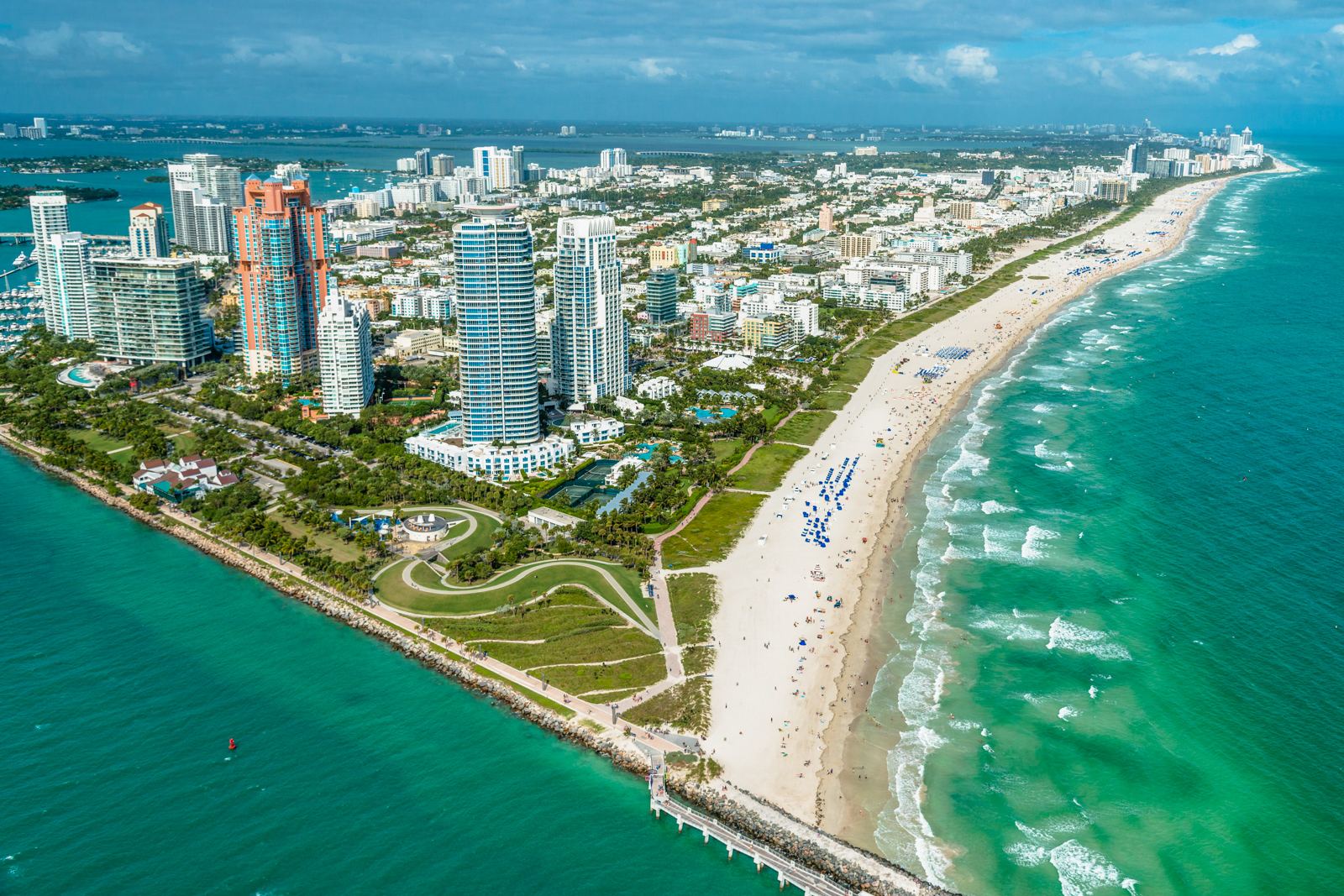
Miami, known for its beaches and nightlife, is far more than the art deco and the party destination rightfully earned wherein you’ll find something that feels like a real startup ecosystem: vibrant, international, and increasingly respected on global rankings. This is the story of how Miami and Florida evolved from a tourism-centric economy into a dynamic platform for invention, investment, and entrepreneurship, and what it still must do to mature into a world-class innovation hub.
I recently spoke with Innovation Maestro, James Barrood, and Miami's Melissa Medina, CEO of eMerge Americas, prompting in my policy and economic development work with cities, the following deeper dive on the city, with Founder Institute's local leaders Ryan Martin and Grace Spindel. Tune in here:
It’s tempting to start with hype, “Miami is the next Silicon Valley,” and for a stint, Miami leaned too far into being a cryptocurrency hub as it sought some attention from the buzz that surrounds innovation. Both are lazy and if you’ve read enough of my work, you know it’s also ignorant and misleading. So here we’re going to dig into why with the real narrative which is far more interesting and more useful for founders, investors, and policymakers: Miami is a crossroads city. That positioning (cultural, economic, and geopolitical) shapes both its strengths and its limitations as a startup ecosystem.
Miami’s DNA: Gateway, Maverick, Culture Creator
Miami has always been a narrative of connection and risk-taking. From early 20th-century land booms to its role as the economic bridge between North and South America, Miami has been a city built on the idea that borders are not the end of opportunity. That ethos, an openness to other cultures and markets, underpins why venture dollars now look at Miami differently. In the 2025 Global Startup Ecosystem Report, Miami ranked No. 22 globally and No. 10 among U.S. metros, reflecting not just raw growth but international reach and funding traction.
A couple patterns there deserve attention. First, unlike older, insular ecosystems, Miami’s appeal is intrinsically global. This isn’t accidental: its connections to Latin America and Europe make it attractive for founders looking beyond the U.S. market. Second, Miami’s rise isn’t solely about the usual suspects like fintech or web3; sectors like healthtech are gaining real traction, with startups like OneImaging (which raised $38 million) leveraging AI to solve practical problems in medical workflows.
There’s also a geopolitical dimension often overlooked: Miami isn’t just building consumer apps. It’s positioning itself as part of Florida’s national security tech ecosystem; combining defense, AI, autonomy, and logistics technologies. The state’s military infrastructure, aerospace activity, and research institutions feed into this “dual-use” startup layer where government, enterprise, and academic research converge.
That’s layered onto the basic economic incentives: Florida has no state personal income tax, no local corporate income tax, and policies that make it easier to capture capital and talent relocating from higher-cost markets.
From Gatorade to Advanced Genome Research: Florida’s Innovation Legacy
Florida’s contribution to invention is real, deep, and often misunderstood. Yes, Gatorade, invented at the University of Florida in 1965 to help athletes replace electrolytes, became a global sports drink phenomenon. But that’s just a start to align your focus around potential here in a way that I often encourage: alignment with unique strengths (or weaknesses) of a region of the world. Florida was home to early breakthroughs in mechanical refrigeration and air conditioning, technologies that made modern life (and modern industry) possible. Sunscreen was popularized here, concentrated orange juice was commercialized, and even major cultural industries like NASCAR have roots in Florida ingenuity.
Today, that legacy continues in places like the Cade Museum for Creativity and Invention, named after the Gatorade inventor, which is purpose-built to inspire current and future inventors. In 2020 alone, Florida produced more than 5,500 patents; a testament to a persistent innovation engine tied to universities, federal labs, and private R&D (one which I’d like to see and help evolve).
Every ecosystem needs its first believers, and in Florida, those weren't VCs in hoodies - they were engineers & builders who chose Miami over Silicon Valley, and proved that you could build world-class products under palm trees." - Ryan Martin; Managing Partner of Five Spheres Capital and Founder Institute Director
How the Economy Actually Works for Startups
Economically, Florida doesn’t have the entrenched corporate hierarchies of older tech hubs. That’s a double-edged sword. On one hand, new firms don’t have to battle decades of turf battles or cultural inertia. On the other, there isn’t the same density of seasoned entrepreneurial talent or legacy industry to absorb and scale early-stage innovation. The state’s growth, reflected in rising startup applications, shows demand for entrepreneurship is high.
Government plays a mixed role. Organizations like Space Florida have acted as de facto economic developers for specific sectors such as aerospace and manufacturing by consolidating authorities and financing mechanisms to accelerate investment. Local governments, from Miami-Dade to Tampa, have leaned into innovation strategy as a core economic development tool, not just an afterthought to tourism or real estate; this is, though, why we’re going to dig into the strengths and gaps in the region’s economy for entrepreneurs..
Notably, Florida’s policy environment is more laissez-faire than strategic. It’s designed to attract businesses through tax policy and regulatory simplicity, not to coordinate innovation around shared outcomes. You feel this in ecosystem gaps: funding spigots turn on for attractive seed and growth stages, or to chase an innovation bubble (as was evident with crypto) and so there’s less focus on pre-seed support or systematic capital bridge mechanisms.
Florida Companies and Founder Stories that Lay a Foundation
Florida’s startup landscape may not yet churn unicorns at Silicon Valley pace, but it is producing meaningful exits. In Tampa Bay, ConnectWise, technology management firm, sold for $1.5 billion and catalyzed a cybersecurity ecosystem cluster. Its founder, Arnie Bellini, reinvested returns into workforce development and AI/cyber education initiatives.
In Miami, founders like Matthew Vega-Sanz, co-founder of insurance infrastructure platform Lula, which raised tens of millions from premier Silicon Valley funds, show that Florida can breed and export globally competitive founders.
Miami has also become a magnet for international startups. Lluís Faus, co-founder of Barcelona-founded legaltech vLex, has Miami as his home base, enabling global scale for vLex, which landed a landmark $1 billion acquisition by Clio, underscoring Miami’s growing role as a hub for globally significant exits." - Founder Institute Director, Grace Spindel
Added Ryan, "When Chewy's founders built a pet supply empire from Miami before their $3.35 billion acquisition by PetSmart, they created a blueprint: Florida could produce not just exits, but unicorns."
Venture capital is real too. Florida Funders, a hybrid VC and crowd-funding platform, has catalyzed early-stage deals and syndicates statewide, partnering with angel networks to scale capital access. And in 2025, Florida startups raised more than $2.8 billion across hundreds of deals, with Miami anchored as the dominant regional center.
Startup Development Organizations and Capital Sources
Florida’s network of startup development organizations is expanding. In Miami, eMerge Americas functions not just as a conference but as a connective tissue between founders, investors, and global partners. It’s increasingly a place where defense, AI, and deep tech conversations intersect, showing that ecosystem identity is developing more than social media hype.
Other accelerators and coworking hubs (often organically grown, which should change) provide community and mentorship; but that means a critical shortage of world-class operator-mentors with multiple successful exits, and that gap limits founder learning loops.
Two critical co-working hubs anchor Miami’s founder ecosystem - not as desk providers, but as platform builders with real programming, capital access, and pathways to scale. Mana Tech operates programs like Scale2Miami, designed to support MVP-stage startups expanding into the U.S., while The LAB runs a very selective Miami Founder Residency program with focal.vc, serving as a launchpad for technical AI founders. "These builders have access to mentorship from focal vc and Miami-based unicorn founders," noted Grace Spindel.
On capital, the state leans on a combination of angel networks, hybrid funds, and regional VC outfits. While big national funds will write Florida checks, a disproportionately high share of early capital still comes from local angel groups and syndicates. That’s healthy, but without larger funds anchoring later rounds, many ventures struggle to scale without leaving the region.
What I’ve highlighted, I hope, paints a picture of clear capability, some success supporting opportunity, and yet some challenges that I mentioned we’d cover in exploring gaps (and strengths). Let’s get to that.
Florida’s Hard Conversations: Ten Capacity Building Imperatives
The internal plumbing of ecosystem success starts with the fact that Miami’s ecosystem is undeniably dynamic, but “dynamic” isn’t the same as “mature.” Changing this is about infrastructure, incentives, and outcomes, and to do that, we look to 10 considerations of entrepreneurial capacity building:
-
Overcoming Siloes: Miami’s community feels vibrant, but founders still report fragmentation between sectors: health, aerospace, and defense operate in their bubbles where there could be overlapping alignment. Shared infrastructure and communication platforms are essential, not just meetups.
-
The Missing Middle: Seed capital exists and late-stage interest is rising, but the gap between early product-market validation and meaningful scale remains wide. That’s where Florida needs intentional impact: funds designed for that middle stretch.
-
Long-Term Funding and Incentives: Yearly boosts in VC raises are good news, but entrepreneurial strategy requires predictable support over decades, not boom-and-bust, and not leaning in on hype cycles. Florida’s incentive ecosystem should align with long-term capital commitments.
-
Measuring Outcomes, Not Activity: Ecosystems often count events, accelerators, and pitch competitions, but not exits, jobs created, or follow-on funding. Leaders need to shift toward metrics that matter.
-
Culture and Collaboration: Miami’s cultural diversity is one of its strengths, but collaboration doesn’t happen automatically. Incentives need to reward shared problem-solving, not just individual wins.
-
Inclusive Talent: Miami attracts high-profile founders and remote tech workers, but full inclusion (across socio-economic, cultural, and educational backgrounds) remains uneven. This isn’t an ethical goal; diverse talent equals stronger innovation. Particularly evident in how we’re seeing academic work increasingly dependent on creative and entrepreneurial people.
-
Environment for Peak Performance: Hot climates and traffic congestion matter. Founders need real 24/7 environments such as labs, venture studios, prototyping spaces, incubators, and reliable infrastructure, not just coworking spaces (nor coworking spaces masquerading as startup development organizations).
-
Aligning Government, Academia, and Industry: The more effective ecosystems (think Boston or Silicon Valley) have alignment across sectors. Speaking from my experience in Texas, this is something that lacking can seriously handicap an economy while frustratingly is also easily overcome (we’re working on it!). Florida is more like Texas, with pockets of collaboration, but alignment lacks strategic cohesion with measurable targets.
-
Reducing Risk Through Local Competitiveness: Startups succeed where markets are accessible. Florida needs to improve procurement pathways for local startups into government and enterprise clients.
-
Adapting Global Best Practices: Copy-pasting Silicon Valley doesn’t work. But treating proven frameworks as inspiration (not blueprints) will help build a unique Florida model. Starting with Founder Institute’s ecosystem canvas, for example, is an easy framework to apply.
Miami Excels and Can Improve
Miami’s biggest success is its ability to attract capital and attention. Investors increasingly write checks here because the city’s global story resonates: international reach, zero state income tax, and cultural magnetism. But excitement alone doesn’t build sustainable growth. To operationalize excellence, programs need rigorous recruitment of mentors who’ve built and exited companies, not just hosted events. They must spotlight success stories in ways that make real, repeatable recipes visible, not just social media fodder.
What you might appreciate is that Miami has the ventilator but it’s still building the heart. When founders can regularly find capital that stays in Florida for multiple rounds; when serial founders mentor the next wave; when government, research institutions, and funders align behind specific measurable goals, that’s when “ecosystem” turns into a lasting innovation engine.
Miami is not a newcomer to invention and risk-taking. Its culture has always been about connection and reinvention. But a culture of excellence, where the next billion-dollar company comes from and stays in Miami, requires the kind of gritty, strategic investment most ecosystems take decades to build.
Founder Institute, launching soon with early enrollment here, ending March 1st, for programming live in April, addresses many of these gaps head on, bringing those experienced mentors, opening collaboration and competition, and putting in place the frameworks, methodologies, and systems wherein startups thrive.
A challenge for founders: what’s your part in shaping that future? Entrepreneurs don’t just benefit from ecosystems, they build them. Miami’s next decade depends on founders who think that way.