
Most founders spend 30 minutes deciding how to choose a startup accelerator, then spend three months inside one. That ratio is backwards, and it explains why talented people routinely finish programs with little to show for it. Not because accelerators fail. Because they picked the wrong one.
After running more than 1,200 accelerator cohorts across 200 cities and 65 countries, and watching over 8,900 alumni raise more than $2 billion in funding, the Founder Institute has a clear view of what actually drives outcomes inside these programs. The founders who extract the most value are not necessarily the ones with the best ideas. They are the ones with the best program fit. And program fit is something you can evaluate systematically before you submit a single application, if you know what to look for.
This guide covers the factors that actually predict whether an accelerator will be worth your time, your equity, and the next 90 days of your life.
Stage Fit Matters More Than Brand Name
The single most common mistake founders make is optimizing for prestige when choosing an accelerator. Y Combinator, Techstars, 500 Global: these are real programs with real track records. They are also designed for companies that already have a product, early traction, and a founding team ready to run hard toward funding day.
That design is not a flaw. It is a deliberate feature. These programs work because they filter for companies at the right stage for their curriculum. The problem is that the large majority of first-time founders who apply to these programs are not at that stage yet. They have genuine domain expertise, strong drive, and a compelling problem. What they lack is a validated product and the startup execution experience to make 90 intensive days worthwhile.
When a stage-mismatched founder lands inside a seed accelerator, one of two things happens. They spend the program scrambling to build something that looks fundable, rather than something that is fundable. Or they get filtered out at the application stage, get discouraged, and stop looking entirely. Neither outcome benefits the founder or the ecosystem they are trying to build in.
A pre-seed startup accelerator serves a different function. It starts at Step 0, before the MVP, before the first customer, sometimes before the idea is fully formed. The curriculum is designed to validate assumptions, build the right founding team, and develop a business model that holds up to real scrutiny. That is a different kind of program with a different kind of value, not a lesser one.
The first question to ask when evaluating any program is not "how prestigious is this accelerator?" It is: "Does this program serve founders at my exact stage?"
How to Choose a Startup Accelerator: Start With Your Founder Profile, Not Your Idea
The accelerator industry has a consensus problem. Most programs evaluate applications based on the idea, the market, and early traction signals. Implicit in that selection process is the assumption that ideas are the primary driver of startup success.
Sixteen years of data from the Founder Institute says otherwise. Practitioners across FI's global network consistently echo the same conclusion: bet on the founder, not the idea. Early-stage programs should select for founder traits such as resilience, curiosity, self-reliance, and coachability, not pitch quality alone.
The Founder Institute's Entrepreneur DNA Assessment, backed by PhD-level research and benchmarked against 250,000 candidates across 126 countries, predicts minimum startup performance with 85.1 percent accuracy. The 26 traits it evaluates, including risk tolerance, perseverance, adaptability, autonomy, and emotional control, are more predictive of founder outcomes than the quality of any early-stage idea.
This insight has direct implications for how you should choose a program. A founder with high analytical capability but lower social confidence needs a structured mentorship environment with clear frameworks and feedback loops, not an open-format networking sandbox. A first-time founder with high vision scores but weaker execution discipline needs accountability systems built into the program itself. A corporate executive making the transition to startup life needs a curriculum that addresses the psychological reorientation of moving from resource-rich to resource-constrained, not just tactical startup advice.
When you evaluate an accelerator, ask about its approach to founder development specifically. Does the program have a systematic way to understand who you are as a founder, not just what you are building? Is mentorship matched to your specific gaps, or is it a rotating roster of advisors delivering the same session to every cohort? Programs that cannot answer those questions clearly have not thought through what they are actually doing and why.
The Real Cost of Equity: A Calculation Most Founders Skip
Accelerator equity is not the most important variable in your decision, but it is one that founders consistently underestimate because they do not model the math at the right scale.
A program that takes 7 percent equity in exchange for $150,000 feels like a reasonable trade at the pre-revenue stage. Run that through realistic exit scenarios. If your company exits at $50 million, that 7 percent represents $3.5 million. At $100 million, it is $7 million. At $500 million, it is $35 million. A decision made in the first 90 days of your company's life compounds through every future funding round and every subsequent dilution event.
This does not mean equity-taking programs are bad deals. It means you need to calculate what you are actually receiving in return and whether the network access, curriculum quality, and credibility signal justify the stake. If the answer is yes after running those numbers clearly, the equity is worth it. If you have never run those numbers at all, you are not making a fully informed decision.
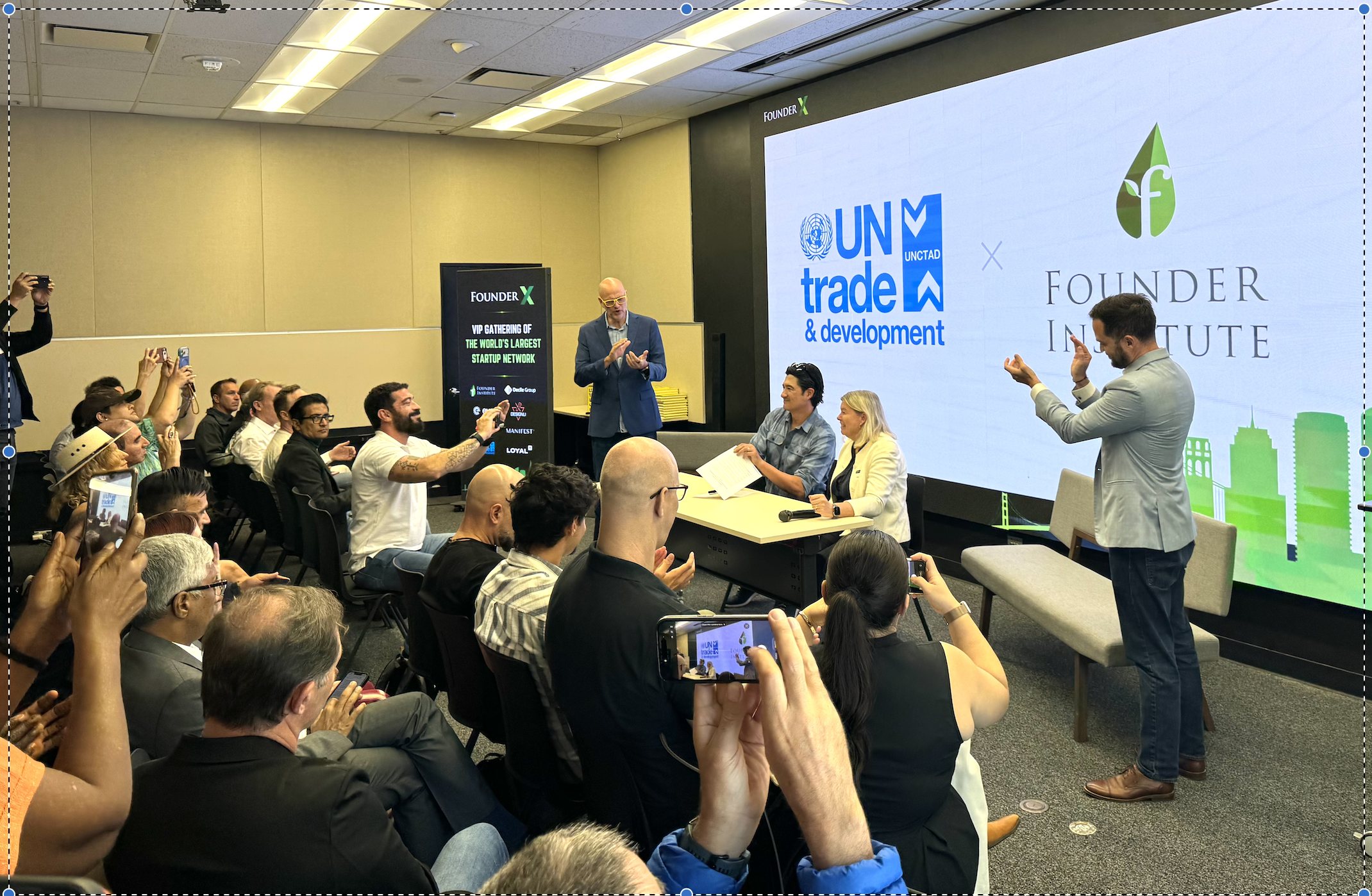
For founders in government-supported programs or nonprofit contexts, equity-free accelerators are often a better structural fit. The Founder Institute's government partnership programs, including Startup 425 (serving six cities in the Seattle area) and programs run with UNDP and USAID, operate on an equity-free model. In the Startup 425 program, 100 percent of graduates formed new businesses, and the partnership was renewed for four additional cohorts. An equity-free structure does not signal a lower-quality program. It signals a program designed for a different funding environment and mission.
Before signing any accelerator agreement, model the equity impact across at least three exit scenarios. The right program will still justify itself after you see that number clearly.
What Mentor Quality Actually Means
Every accelerator will tell you it has an exceptional mentor network. Without definition, that statement is nearly meaningless.
Network size does not equal network quality. A program with 400 mentors who deliver one-off office hours is a fundamentally different experience from one with 40 deeply engaged mentors who give structured, cumulative feedback over 14 weeks. Founder Institute has more than 40,000 mentors and investors in its global network. That number matters not because bigger is always better, but because it enables precision matching. A founder in Nairobi can access mentors with specific expertise in East African regulatory environments, regional investor relationships, and the practical realities of building in that market. Scale only creates value when it is paired with matching infrastructure.
But quality goes deeper than matching. Research published by Wharton confirms that accelerators significantly improve startup outcomes when mentorship is structured and outcome-oriented, not merely available. The difference is accountability. A mentor who reviews your work over multiple sessions, gives structured criticism, and tracks your progress delivers an order of magnitude more value than one who joins a one-hour panel and offers generic advice.
When evaluating mentor quality, ask directly: How often will I work with the same mentors across the program? What is the feedback mechanism? Are mentors selected based on my specific gaps, or is access first-come, first-served? A program that cannot answer those questions clearly has not built real mentorship infrastructure.
The Questions to Ask Before You Apply
Most founders evaluate accelerators by reading the website and checking the alumni list. That is the beginning of due diligence, not the end. Before applying, get direct answers to these questions from program directors or current alumni.
- What does a typical week look like inside the program? The ratio of structured curriculum to networking to one-on-one mentorship tells you whether the program is designed for learning or for optics. Intensive programs that demand real output from founders every week are not comfortable. They are effective.
- What does post-program support look like? The 90 days inside an accelerator are only as valuable as what they connect to afterward. Programs with active alumni networks, follow-on funding access like the FI Venture Network, and structured communities extend the program's value far beyond funding day. Programs that go dark after graduation are offering a sprint without a finish line.
- What is the graduation rate and what does the program actually demand? A high completion rate in a rigorous program is a strong positive signal. A high completion rate in a program with no real accountability is not. Ask what the program expects of you before you commit, not after you are inside.
- What is the program's theory of how founders build successful companies? Not the marketing language; the actual operating model. Does the program invest in founder development alongside product development? Does it push every founder toward venture funding regardless of business model fit? Does it have a framework for distinguishing which funding path is right for which kind of company? The intellectual honesty of those answers reveals more about a program than any alumni testimonial.
The One Step Most First-Time Founders Skip Entirely
Before you research a single accelerator, do one thing: honestly assess where you are in your founder journey right now.
Do you have a validated product and early customers? A seed accelerator is likely the right fit. Do you have strong domain expertise and entrepreneurial drive but no product yet? A pre-seed program is built for exactly your stage. Are you still deciding whether entrepreneurship is the right path? That question has an evidence-based answer available before you commit to any program.
The Founder Institute's DNA Assessment is free to take. It evaluates the 26 traits that predict startup performance against a global benchmark of 250,000 founders and aspiring entrepreneurs. It will show you where you are naturally strong, where you need deliberate development, and what kind of structured environment is most likely to bring out your best as a founder. It is the most useful single input for how to choose a startup accelerator, because it clarifies what you need from a program before you start comparing what programs offer.
University innovation practitioners have observed that AI tools are rapidly becoming table stakes. The ability to identify real problems, mobilize resources under uncertainty, and sell a vision to skeptical stakeholders represents the durable skill advantage. An accelerator worth your time should be developing that capability in you, not just giving you a network and a pitch.
Choosing a startup accelerator should not feel like picking a college based on rankings. It should feel like a strategic decision about the specific development environment that gives your specific founder profile the best chance at building something that lasts.
If you are ready to find your fit, apply to the Founder Institute and start with the DNA Assessment. Knowing who you are as a founder is Step 0 for everything that follows