

What does it actually take to build a thriving startup ecosystem? Not the version with a co-working space, a funding day, and a grant, but the kind that produces fundable companies, creates wealth locally, and keeps compounding for decades?
That was the question at the heart of our recent Founder Institute session, "Economic Development: How to Build Entrepreneurial Communities." Hosted by Ayhan Isaacs, Head of Economic Development at the Founder Institute, the panel brought together two people who have built ecosystems from the inside. Paul O'Brien spent over a decade in Silicon Valley, helped build the Founder Institute in Texas, and recently published the book Startup Ecosystems. Kevin Siskar ran the Founder Institute in New York City, helped launch 164 companies, worked at an economic development seed fund in Western New York, and is now co-founder and CEO of Finta.
You can watch the full session on YouTube here: Economic Development: How to Build Entrepreneurial Communities.
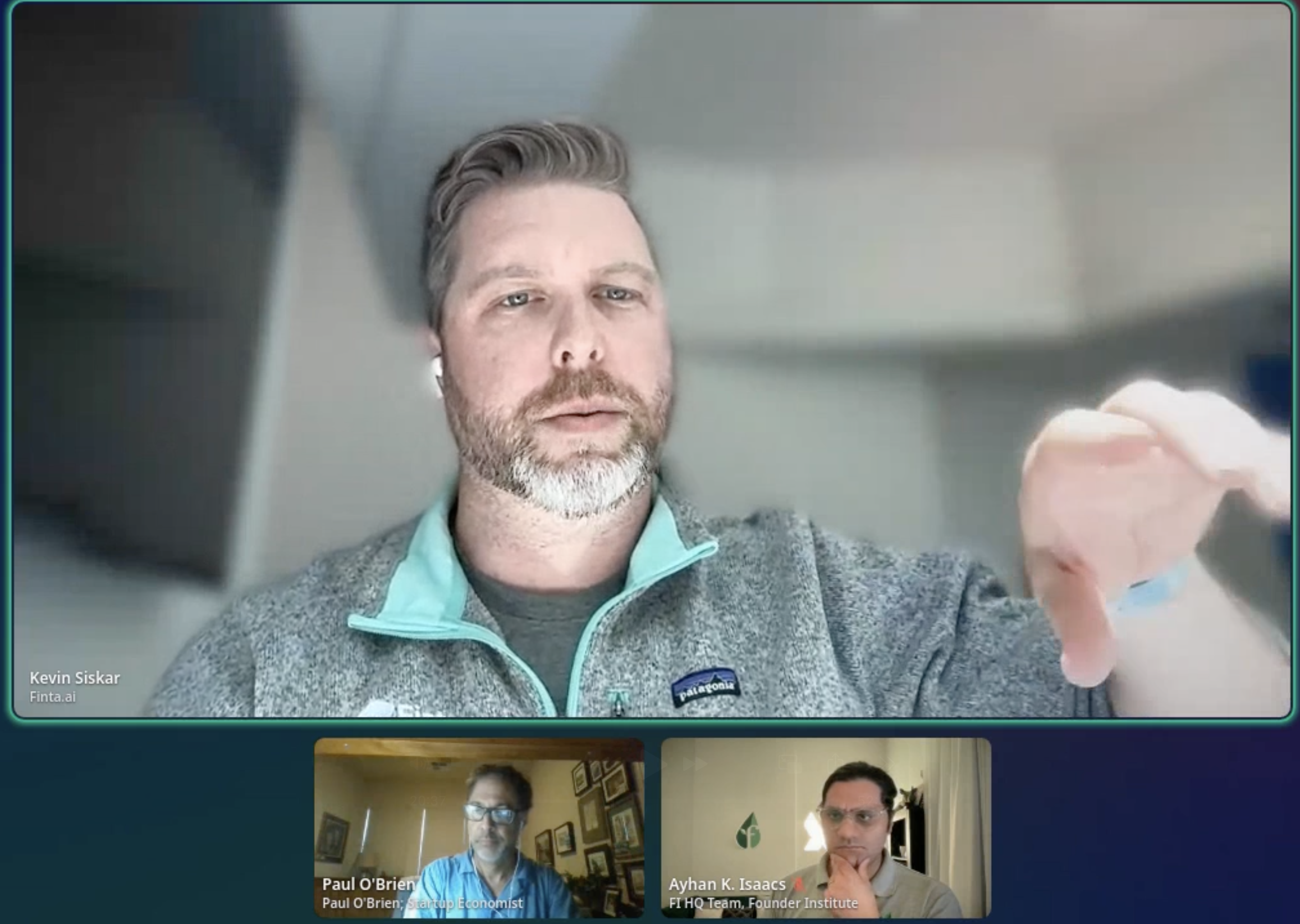
Kevin Siskar of Finta, Paul O'Brien, and the Founder Institute's Ayhan Isaacs during the live panel. Watch the full conversation on YouTube.
Here are six of the biggest takeaways from a conversation that could have easily run another hour.
1. A city is too small to be an ecosystem
One of Paul's most provocative points: most cities are simply too small to support a startup ecosystem on their own. "Silicon Valley is four cities, people. It's not one city," he reminded the audience. The first move is figuring out how to get the state, region, or country meaningfully involved, rather than expecting a single city to build an ecosystem on its own.
The practical mechanism is to tie funding to expectations. If a state hands down a large grant, it should require outcome-based metrics from the accelerators and incubators it funds, so the programs are accountable for real impact rather than activity.
2. Measure outcomes, not income
Both speakers warned against celebrating the wrong things. Too many ecosystems point to how many funding days they hosted, how many events they ran, or which innovation award they won, as though that proves the system is working.
"Are we having the impact that matters?" Paul asked. The metrics that count are downstream: who is getting funded, are startups actually growing, and over the longer horizon, are jobs being created. Kevin added an important caveat on jobs numbers. Because that is what politicians and grantors care about, ecosystems sometimes optimize for short-term hiring stats, filling a role to hit a number instead of making the best long-term hire, which can quietly stunt a company's growth and cost it the next twenty hires down the line.
3. Break down the silos
When capital is scarce, people protect it. Kevin described how emerging ecosystems often fall into status games, with the groups managing the money guarding their turf instead of collaborating. He recalled a peer in Australia admitting that local players "would knife each other in the back" because there was so little capital to fight over.
The fix is shared infrastructure that everyone in the ecosystem uses, whether that is a common CRM or community platform, so mentors, investors, and advisors are all discoverable and connected. Kevin described a tipping point he has watched happen in places like New York City, where Google, Twitter, and Facebook opening offices grew the base of engineers until "the table flips." Suddenly the mindset shifts from scarcity to abundance, reputation starts to travel, and people move from protecting capital to sharing deal flow.
4. Market your ecosystem beyond its own borders
Paul was openly critical of how poorly most communities promote themselves. "There is almost no city or startup ecosystem in the country that's actually good at screaming from the mountaintops," he said. The networking events and community gatherings are necessary, but they are not evidence of success on their own. The real gap is that almost nobody outside the city ever hears about what is happening inside it.
His advice: fix your communications, fix your newsletters, and promote your wins aggressively to the outside world. The reason a community gathers is so that everyone else, including investors and advisors elsewhere, can figure out how to participate. Hype, used well, is what drives attention and demand. Everyone knows about Austin and Silicon Valley for a reason.
5. Specialize, and create optionality
Trying to be a generic "tech" or "startup" ecosystem is a losing strategy. As Paul put it, if you are number 30 on the list, you are not getting anyone's attention. Ecosystems need to be sector specific, whether that is ag tech, energy, video games, or AI applied to a particular vertical.
The deeper reason is optionality. Most startups fail within twelve to eighteen months, so a founder will only relocate to and stay in a city if they believe they have other options there, including jobs in the same sector if their company does not work out. Specialization is what gives founders the confidence to commit.
6. Educate the investor class, not just founders
Perhaps the strongest shared conviction of the night: ecosystems obsess over educating founders while ignoring investors. Kevin argued that creating a few local millionaires through an exit does not automatically create angel investors. The investor class needs education too, and exposure to outside returns from places like Silicon Valley and New York, which levels them up the way bringing star players into Major League Soccer raised the level of the whole league.
Paul went further, insisting that the problem is almost never a lack of capital. The real issue is that the ecosystem is not creating the conditions for healthy returns, so investors stop participating and capital fails to recycle. Real estate or oil and gas investors who call themselves startup investors without doing the work need to be transitioned out or repositioned, while serious angels need real training. Pair that with ecosystems that genuinely help founders grow, and capital follows.
The Monday-morning version
Asked what a mayor, an economic development director, and a founder should each do differently, the panel kept it simple. Mayors should get properly trained on what startups are and become loud public advocates. Economic development leaders should drive outcome-based metrics and capital recycling. And founders should lead with empathy and pay it forward, because today's founders are the people who will build the ecosystem for everyone who comes next.
The recurring theme tying it all together was intellectual humility. As Paul reminded everyone, nobody has all the answers, the landscape keeps shifting, and the biggest gap holding regions back is simply education.
Want to join conversations like this one? The Founder Institute hosts free online events on startups, AI, and building entrepreneurial communities every week. Browse upcoming events at fi.co/events.
And if you lead a government, agency, or economic development organization that wants to build a thriving local startup ecosystem, see how the Founder Institute partners with regions worldwide at fi.co/government.