
Most economic development organizations run workforce programs and startup programs as two completely separate things. Different teams. Different budgets. Different KPIs. And yet the single largest untapped source of new founders in any region is sitting right inside the workforce pipeline.
Building a workforce-to-founder pipeline is not a new idea. It is a missing one. Across hundreds of cities, EDOs have invested in reskilling programs that prepare workers for the next job, while the real opportunity (converting entrepreneurially-minded workers into business owners who create the next jobs) goes almost entirely unfunded and undesigned.
That gap is becoming more expensive every year.
With over 4 million baby boomers retiring annually and AI displacing knowledge workers across industries, the question is no longer whether workforce disruption will drive more people toward entrepreneurship. It is whether your city has a program ready to catch them when it does.
The Workforce-Entrepreneurship Disconnect Is Costing Cities Real Jobs
Here is what most regional startup ecosystems are missing: nobody owns the transition from "displaced worker" or "career changer" to "new founder."
Workforce development boards focus on job placement. Employer partnerships focus on talent supply for existing companies. Accelerators and incubators pick up founders who already have ideas and teams. The gap between "person with entrepreneurial potential in the workforce" and "founder with a validated business concept" is where most new companies never get started.
The consequences are measurable. Economic development practitioners consistently describe a lack of deal flow as one of their top frustrations: local investors and accelerators report that not enough quality startups exist for them to fund. The answer, almost always, is that not enough new founders are being created. And the population most likely to become those founders (career professionals with domain expertise, industry networks, and real problem awareness) is aging out of the workforce without ever attempting a venture.
Policy makers compound this problem by conflating small businesses with startups. Programs designed for workforce-adjacent small business support (slow procurement, job-retention metrics, compliance-heavy grants) actively disadvantage the high-growth entrepreneurial ventures that drive outsized job and wage growth. A workforce-to-founder pipeline requires a distinct design. The standard workforce development playbook does not provide one.
Why Your Workforce Is Your Best Source of New Founders
University-based entrepreneurship programs tend to serve a narrow population: students who are already enrolled, already adjacent to research commercialization infrastructure, and already self-selecting for startup culture. They do not reach the 95 percent of potential founders who are in the workforce, between careers, or nowhere near a university campus.
The workforce, by contrast, contains a much larger and more diverse pool of latent entrepreneurial talent. Consider who is already in your region's workforce development pipelines:
- Mid-career professionals displaced by automation or industry consolidation who have deep sector expertise and no clear next role to transition into
- Retiring employees from anchor institutions with decades of industry knowledge and often some capital to invest in their own ventures
- Immigrants and refugees enrolled in workforce programs who bring the resilience, resourcefulness, and motivation that correlate strongly with entrepreneurial success
- Veterans transitioning out of service who carry operational discipline, leadership experience, and a bias for action
- Employees at large local employers who hold intrapreneurial ideas they have never had a formal pathway to pursue
The shared characteristic across all of these groups: entrepreneurial potential that is invisible to traditional workforce development metrics but entirely measurable with the right tools. Research spanning 16 years of PhD-backed social science has validated that entrepreneurial traits (resilience, openness to risk, creativity, and motivational drive) can be identified at scale through psychometric assessment. The Founder Institute's Entrepreneur DNA Assessment was built for exactly this purpose: finding founder-grade talent inside large populations, including workforce populations.
When Siemens deployed a similar identification process to identify entrepreneurial talent across its workforce, more than 5,000 employees engaged within the first year alone and over 1,000 completed the assessment. The insight was consistent with what FI has observed across 200 cities: the talent is there. It just needs a structured pathway.
How to Build a Workforce-to-Founder Pipeline That Actually Works
A workforce-to-founder pipeline is not a lecture series on entrepreneurship. It is a structured, sequenced program that moves people from "I have never considered starting a company" to "I have a validated concept and a network of mentors and investors." That journey requires at least three distinct stages.
Stage 1: Identify. You cannot convert every workforce participant into a founder, and you should not try. The first step is identifying which participants have the traits that correlate with entrepreneurial success. Broad deployment of a validated psychometric assessment across a workforce cohort gives EDOs something that almost no other region has: a data-driven talent map of entrepreneurial potential. This is the step that separates a serious program from a well-intentioned one.
Stage 2: Activate. Participants who screen as high-potential entrepreneurs need a specific kind of program. Not traditional small business counseling. Not a late-stage accelerator. But a structured ideation and validation experience. The goal of this stage is not to produce a polished pitch deck. It is to move participants through the hardest part of the founder journey: generating a problem worth solving, testing it against real customers, and deciding whether to commit. Most people with entrepreneurial potential have never done this systematically. When they do, they either find real traction or save themselves years of wasted effort on the wrong concept.
Stage 3: Accelerate. Participants who have validated a real problem and assembled a basic team are ready for a structured pre-seed accelerator program. This stage provides curriculum, mentor feedback, investor exposure, and peer cohort dynamics. It takes participants from a validated idea to a fundable venture in a structured 14-week process. This is where the pipeline connects with the broader startup ecosystem: local investors, corporate partners, and follow-on programs now have a stream of qualified deal flow to engage.
The three stages address something most ecosystem strategies ignore: the power law of new company formation. To get two or three breakthrough companies, you need a hundred companies trying. To get a hundred companies trying, you need a pipeline that identifies and develops founder-grade talent continuously, not episodically. A workforce-to-founder pipeline is how you build that constant flow from the ground up. Founder Institute works with government and economic development partners to design and run programs across all three stages.
What a Real Workforce-to-Founder Program Looks Like
The Startup 425 program in the greater Seattle region provides the clearest available proof that a workforce-to-founder pipeline works at scale and that it works for traditional businesses, not just technology startups.
Six suburban cities (Bellevue, Kirkland, Issaquah, Redmond, Bothell, and Renton) partnered with the Founder Institute to build a free, structured accelerator specifically designed to serve first-time entrepreneurs. The program included a dedicated track for traditional and main-street businesses alongside technology startups, explicitly recognizing that the workforce-to-founder population is not homogeneous in its ambitions or sector interests.
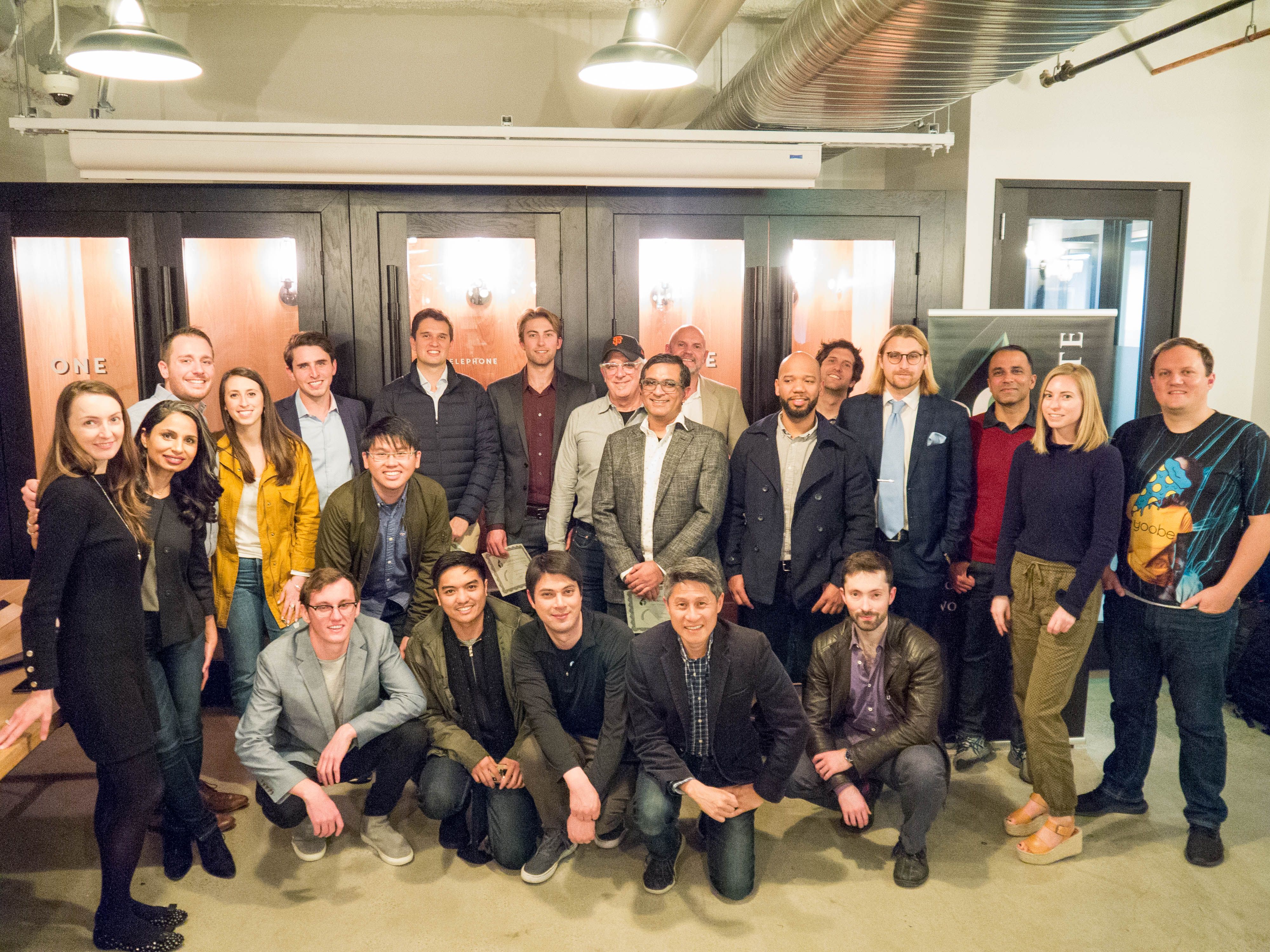
The results: 100 percent of graduates formed new businesses. Fifty percent focused on traditional businesses rather than technology ventures. The program generated 51 local startup events, processed 175 DNA Assessment applications, and ran 38 participants through its first cohort. The cities renewed the partnership for four additional cohorts through 2026. Bellevue Mayor Lynne Robinson publicly endorsed the program.
What made Startup 425 work was the design logic: the program was built for people who had not yet decided to start a company, not for people who had already made that leap. It met potential founders where they were. That is the core insight of a workforce-to-founder pipeline. You are not waiting for founders to self-identify and apply. You are going into the workforce population, identifying the people with the right traits, and building a pathway that makes starting a company a realistic choice.
A parallel outcome played out through the USAID-backed Women in Entrepreneurship program, which trained over 700 participants and launched 22 new tech startups, 35 percent of them women-led. The structure was the same: identify talent in a specific population, provide structured activation, and build toward company formation. The population was different. The methodology was consistent.
Federal Funding That Supports Workforce-to-Founder Programs
The funding environment for workforce-to-founder programs is better than most EDO leaders realize. Several federal and state mechanisms explicitly support the intersection of workforce development and entrepreneurship, and they do not require an either/or choice between the two mission areas.
The EDA's Build to Scale program distributes approximately $50 million per year in competitive grants to organizations building and strengthening entrepreneurial ecosystems. The program explicitly supports talent pipeline development and can fund the identification and activation stages of a workforce-to-founder program when framed correctly as entrepreneurial ecosystem infrastructure.
SSBCI 2.0 is deploying $10 billion across states for small business and startup capital programs. Florida has received $488 million. Texas received $472 million. Georgia received $200 million. States are actively seeking technical assistance providers who can generate a pipeline of investment-ready companies, which is precisely what a well-designed workforce-to-founder program produces at the back end of the sequence.
The SBA Growth Accelerator Fund awards approximately $5.7 million annually across 76 recipients, specifically for organizations running accelerator programs. Applications can be filed directly without a local EDO partner, making it accessible for smaller organizations launching their first structured program.
Foundation funding from Kauffman, Bloomberg Philanthropies, JP Morgan, and PNC Bank has historically supported entrepreneurship programs with workforce and inclusion angles. A program like Startup 425, with its emphasis on serving traditional businesses and underrepresented founders, matches exactly what these foundations prioritize.
The key framing shift: most EDOs apply for workforce development funding and entrepreneurship funding separately. A workforce-to-founder pipeline makes the case that these are the same investment. That is a genuinely differentiated narrative in any competitive grant application.
Three Steps Every EDO Can Take to Get Started
Building a workforce-to-founder pipeline does not require a multi-year, eight-figure commitment upfront. The most effective programs started with a single, affordable entry point and scaled from there.
Step 1: Map your entrepreneurial talent. Deploy the Entrepreneur DNA Assessment across an existing workforce program cohort. The assessment provides immediate data on how much latent founder-grade talent exists in your current participant pool. That data is compelling for board presentations, grant applications, and program design conversations. It costs almost nothing to generate.
Step 2: Run a Startup Ideation Bootcamp. A three-month structured bootcamp (typically $50,000 to $150,000 depending on program size and delivery model) takes your highest-potential participants through the first stage of the founder journey: from talent identification to validated problem. This is the fastest path to demonstrable results: new businesses forming, founders activating, and measurable program outcomes appearing in your economic development reports.
Step 3: Build toward a full accelerator cohort. Once the bootcamp has produced a pool of participants with validated concepts, a 14-week structured accelerator connects them to mentors, investors, and the operational curriculum they need to form legal entities, recruit co-founders, and seek early capital. The Startup 425 model shows that this full sequence, executed across a small number of partner cities, can achieve 100 percent business formation rates.
Innovation does not start with space, capital, or headlines. It starts with talent and access. The workforce-to-founder pipeline is the operational answer to that principle: a system for finding the entrepreneurs already inside your community and giving them the structured pathway they need to build.
The regions that build this system first will have a measurable structural advantage in new business formation, talent retention, and investor deal flow for years to come. If you are ready to bring a workforce-to-founder program to your region, partner with the Founder Institute to design a program that fits your community, your budget, and your reporting requirements.